Scoops, spills and straight answers: the Smart Data Council
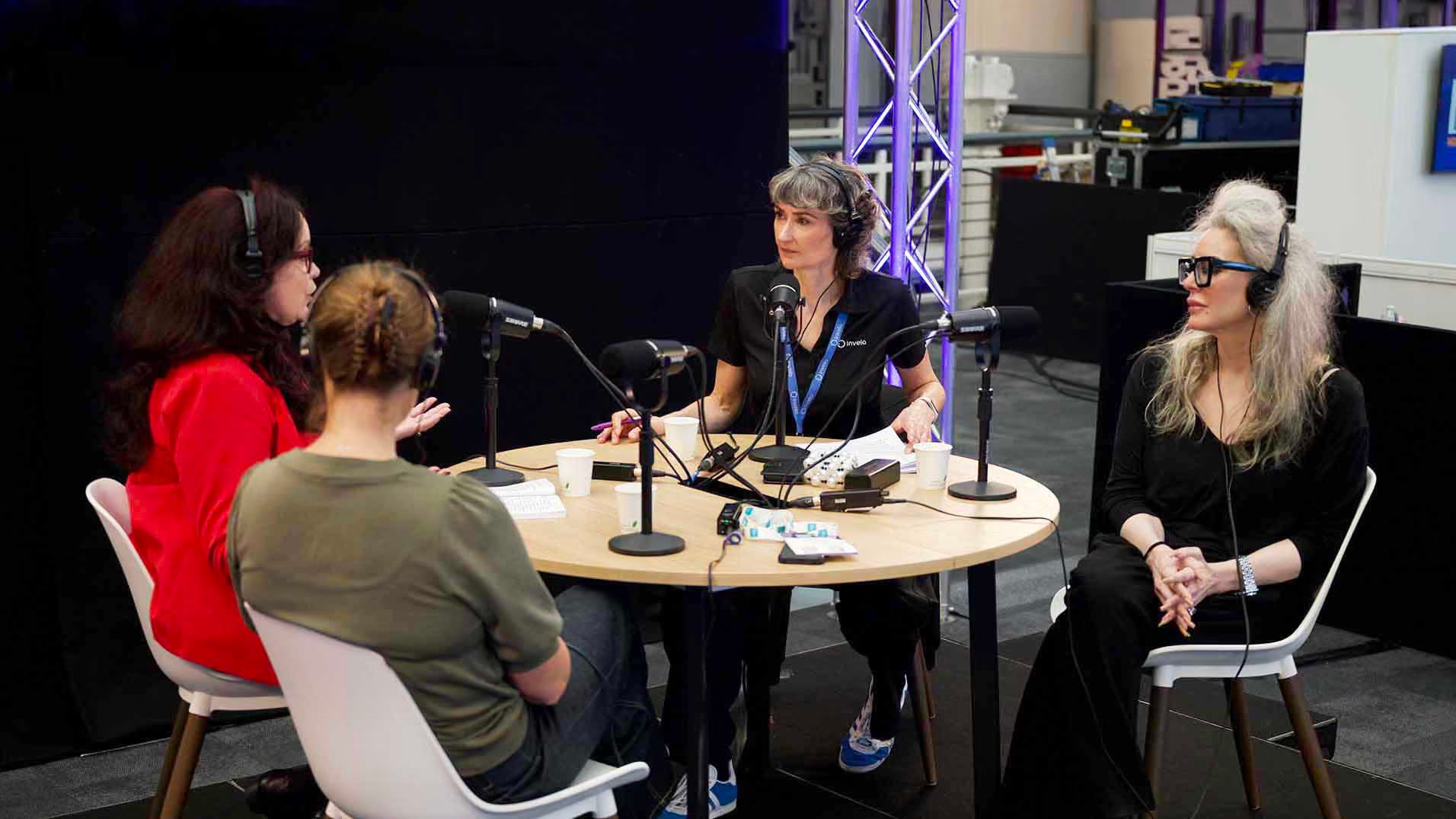

Four UK Smart Data Council members speak as individuals on big tech parity, where the UK lags, and why headline value figures undersell Smart Data.
Officially, the UK Government's Smart Data Council is all about delivery models and best practice. Four of its members, Louise Beaumont, Agnieszka Scott, Ghela Boskovich and Marie Walker, sat down at Open Banking Expo to say what it's actually like inside the room, speaking as individuals rather than employees.
Louise Beaumont, chairing but also speaking as a Council member, set out what makes the room different. It isn't a lobby group, she said. Nobody is paid to agree, nobody is selling anything and nobody is buying anything. There are plenty of lobby groups in this space and they do a good job, but the Council works differently: the person next to her can say “this is not going to work based on what I've seen before,” or “this could work based on what I've seen work elsewhere,” and government hears it at the design stage, not in a consultation after the event. Ideas stick, and it's far easier to shape them while they're still malleable than once they've been concreted into place. This is practical, pragmatic experience rather than ivory tower thinking, she added, and it's about Britain's place on a global stage.
Agnieszka Scott, whose team runs the Council, gave the official frame. The Council began about three years ago as a large stakeholder group, around 50 people working out what to do with Smart Data, which suited a brand-new policy area. Last year it was reshaped into a smaller advisory and advocacy group of individuals with expertise across finance, property, energy and data trusts, and she was clear it will keep evolving as new schemes come online. She also welcomed the friction: she was glad the awkward issues get raised, because otherwise, why would the Council be meeting? Asked what government needs from industry, her answer was one word: cooperation.
With her investor experience, Louise Beaumont put the industry ask simply: what firms always want is clarity on timelines and a roadmap, because that's what they base investment on. They want the confidence to get on and build. Is it as simple as giving them dates, she asked, or is there something bigger underneath?
Ghela Boskovich's sharpest point was the one about who actually has to show up. Big tech, she said, is “the 600-pound gorilla in the room,” and it isn't required to participate in Smart Data schemes the way incumbents are, or the way challengers trying to break into the space are. She also noted that some government-held consumer data is already shared freely while other data is locked down, with no clear logic for which is which. Until every actor in the value chain, small to behemoth, public to private, is treated the same way under the same rules, she argued, investment stays cautious and innovation sits on the sidelines. What she wants is parity, not necessarily a mandate.
Marie Walker came at the same issue from a different angle. She asked whether these schemes were being designed with enough thought for consumers and human outcomes, and why government-held sources of data, HMRC in particular, aren't on the table for things like SME finance. Industry wants to invest, but it needs a tangible roadmap showing where to place its bets.
The UK built open banking first and still thinks of itself that way. Ghela Boskovich named two places where that self-image doesn't hold up. The UK has never enshrined a general consumer data right the way other markets have, correcting what she called a basic asymmetry in who gets to act on their own data. And the country is behind on digital identity and verification specifically, the kind of reusable, dynamically checked credential that lets someone prove who they are once rather than at every single step of a transaction. She pointed to Brazil's law and Singapore's regulator-led model as markets that paired scale with a commercial structure that spreads the cost of participating, rather than leaving it to fall on a small slice of the ecosystem. Marie Walker was more upbeat. The UK has already exported lessons other markets borrowed and improved on, which puts it in a genuine position to leapfrog rather than simply catch up, provided it starts with the obvious pieces instead of trying to solve everything at once.
Marie Walker also had the most telling anecdote of the session. A retail tech firm had a customer's permission to get their supermarket transaction data. The supermarket was obliged to provide it, and simply didn't. The firm went to the ICO, the ICO told the supermarket off, and nothing happened. The law existed; it just wasn't applied. New rules matter, but so does using the ones already on the books.
Louise Beaumont's proposal was simple: a permanent, shared testing ground that sits a step above today's sandboxes and challenge prizes, somewhere industry can test ideas outside current restrictions, regulators can see what growth actually requires, and nobody has to wait for legislation before finding out whether an idea works. The alternative, she warned, is everyone sitting on their hands waiting for a rulebook that hasn't been written yet. There's power in moving early, she argued, so prove an idea to investors and regulators alike, and demonstrate before you legislate. Marie Walker backed the idea, pointing out that Europe's one free, universally accessible open banking sandbox closed this year after being run by a large technology company, leaving smaller, pre-seed innovators with nowhere to build. Louise Beaumont saw that gap as an opportunity for the UK to hoover up that talent, those innovators, those ideas and that investment.
Agnieszka Scott put a figure on the opportunity: over £70 billion in net social value between 2028 and 2043, annual GDP contribution passing £9 billion by 2043, more than a billion payments and 100 billion API calls already running through open banking today. Ghela Boskovich's response was to immediately make the number feel small. Those figures capture direct economic impact, she said, not the social value underneath it: the time saved, the attention returned, the quality of life nobody has put a price on yet, not even at minimum wage for the hour handed back. For Marie Walker, too much of the value gets attributed to the simplest, most visible use cases, when the real gain sits in the unglamorous middle: better underwriting, smoother operations and sharper credit decisions, running quietly underneath products nobody notices. Louise Beaumont’s own worry was that a use case lens is brilliant at carving the smallest possible opportunity out of the largest possible potential. Looking up and out beats looking down and in.
Get a benchmarked risk score for your open finance connections.
Explore Risk Indicator