
Standardized accreditation, optimized for open finance risk
Invela Accreditation gives financial institutions a standardized basis for confident account access decisions. For intermediaries and third-party providers, one accreditation replaces a separate assessment for each financial institution, and helps them improve their Risk Indicator score.

Third-party risk doesn't sit still
Financial institutions grant account access to intermediaries. Intermediaries do the same for the third-party providers they onboard, while still having to earn that access themselves, one institution at a time. Every link in the chain is a new set of questions, answered from scratch each time.
Oversight is fragmented and hard to compare
Financial institutions that onboard intermediaries, and through them third-party providers, face fragmented risk visibility, escalating liability, and resource-intensive oversight, with no consistent way to compare one applicant, and their downstream risk, against another.
The same evidence, assembled again and again
Intermediaries must complete a separate accreditation process with each financial institution they connect to, then repeat the same work in reverse to onboard the third-party providers they bring into the network, increasing the burden at both ends of the chain.
Invela Accreditation: standardized, evidence-based decisions
Invela Accreditation replaces one-off vetting with a single, consistent framework every participant is measured against.
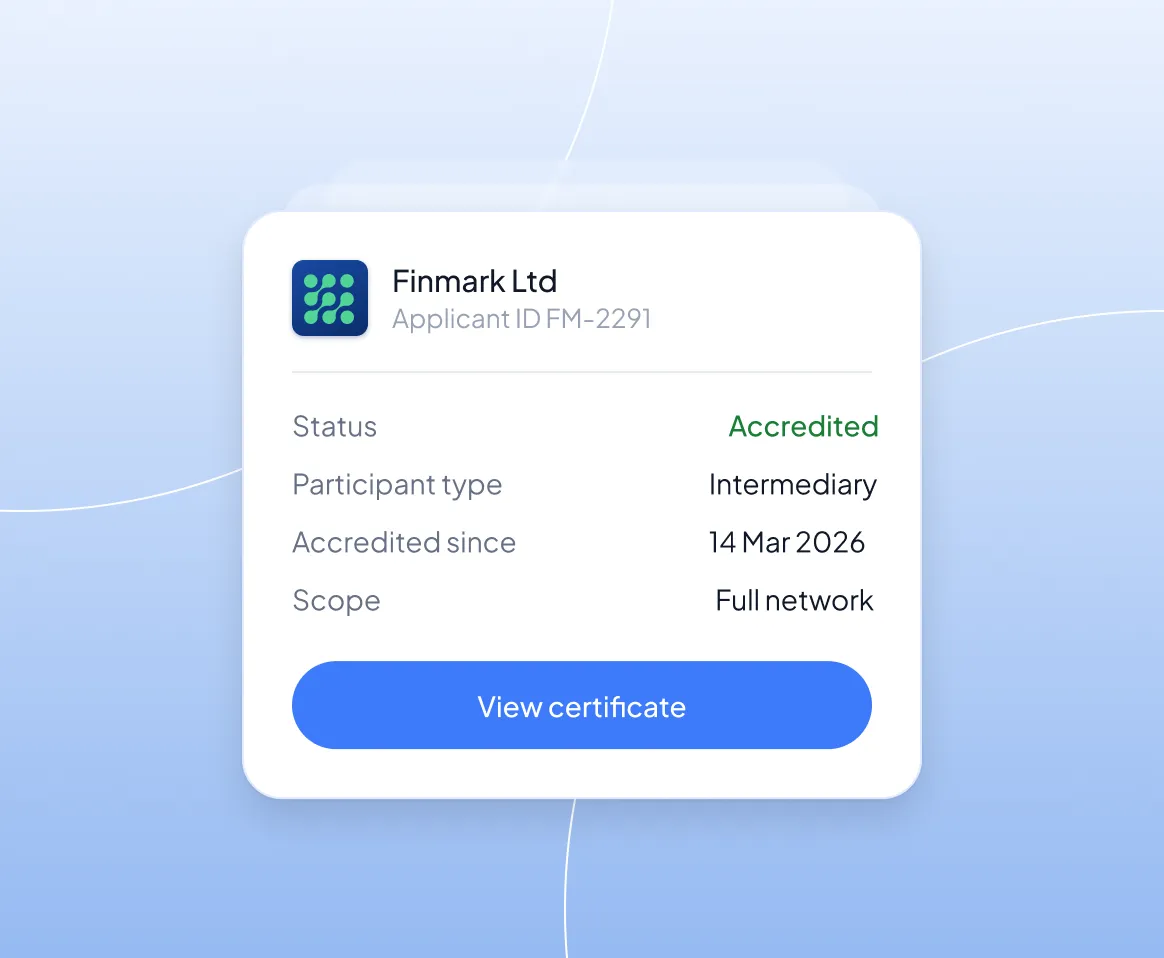
One accreditation, not one for every financial institution
Intermediaries and third-party providers complete a single standardized Invela Accreditation instead of a bespoke process per financial institution. Accreditation also supports a stronger Risk Indicator score.
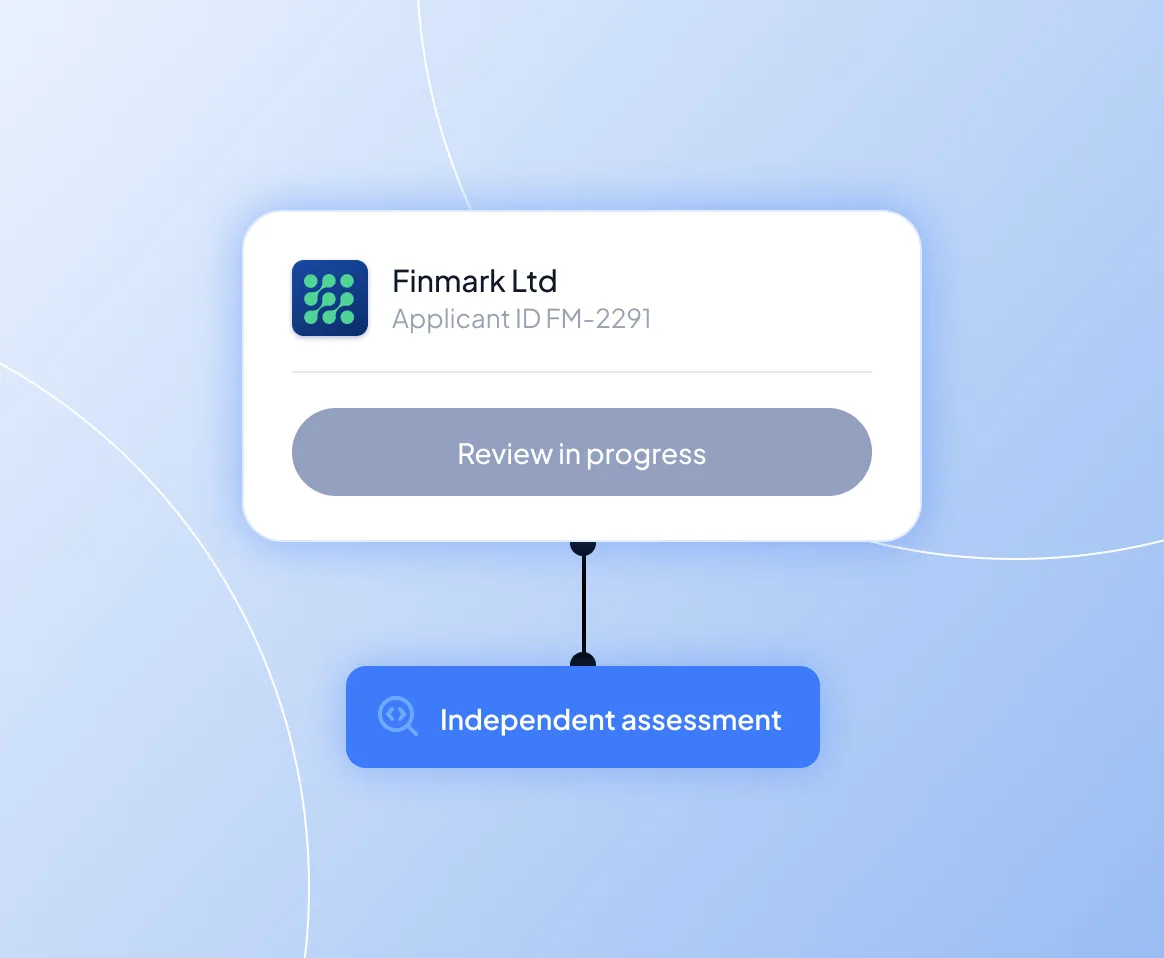
Validated by independent assessors, not self-attested
Invela has embedded independently validated assessments into our Accreditation service, so decisions rest on independently verified evidence.
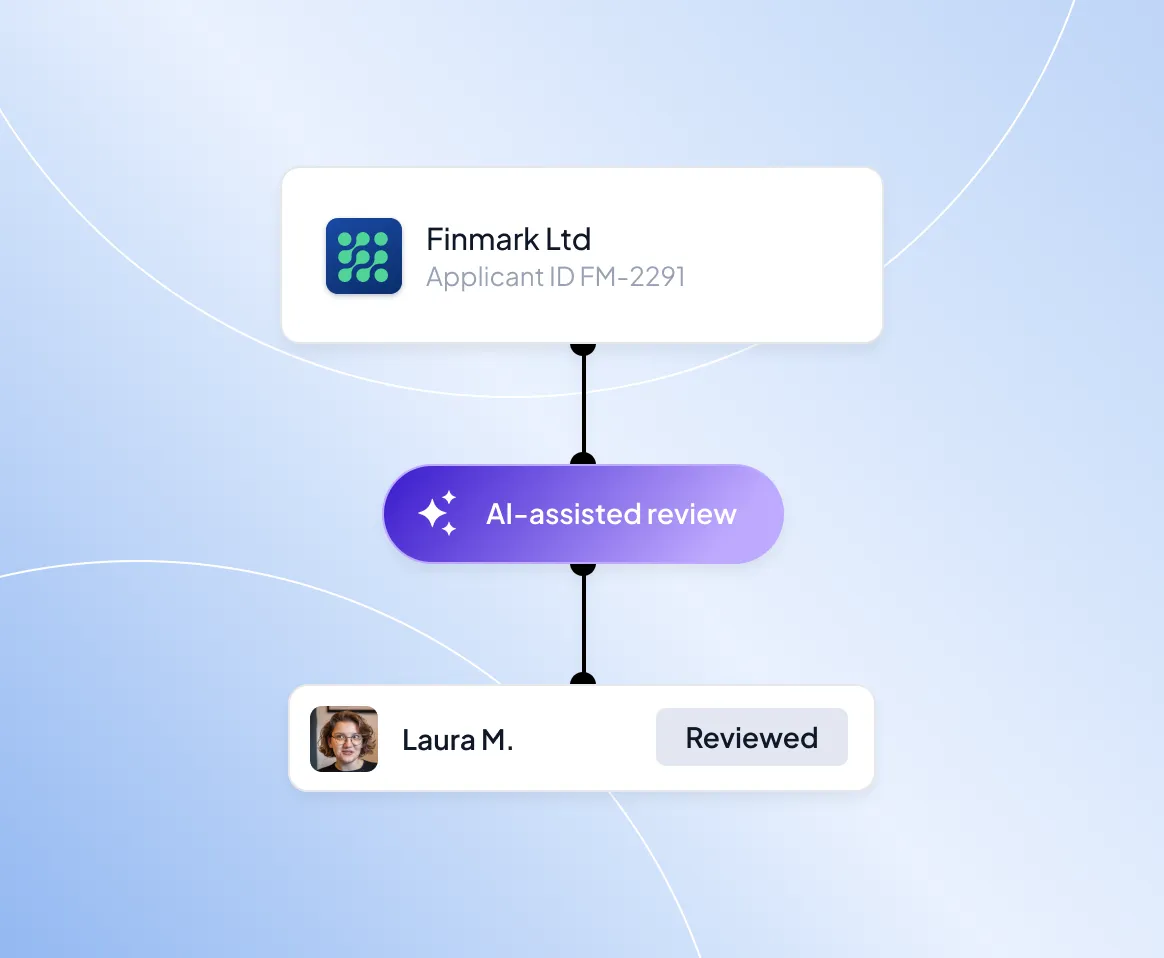
AI-accelerated, human-verified
Invela uses AI to analyze existing documentation, draft responses, and flag completeness gaps, cutting cost and turnaround time. Every output is validated by human assessors from Invela before any decision is made.
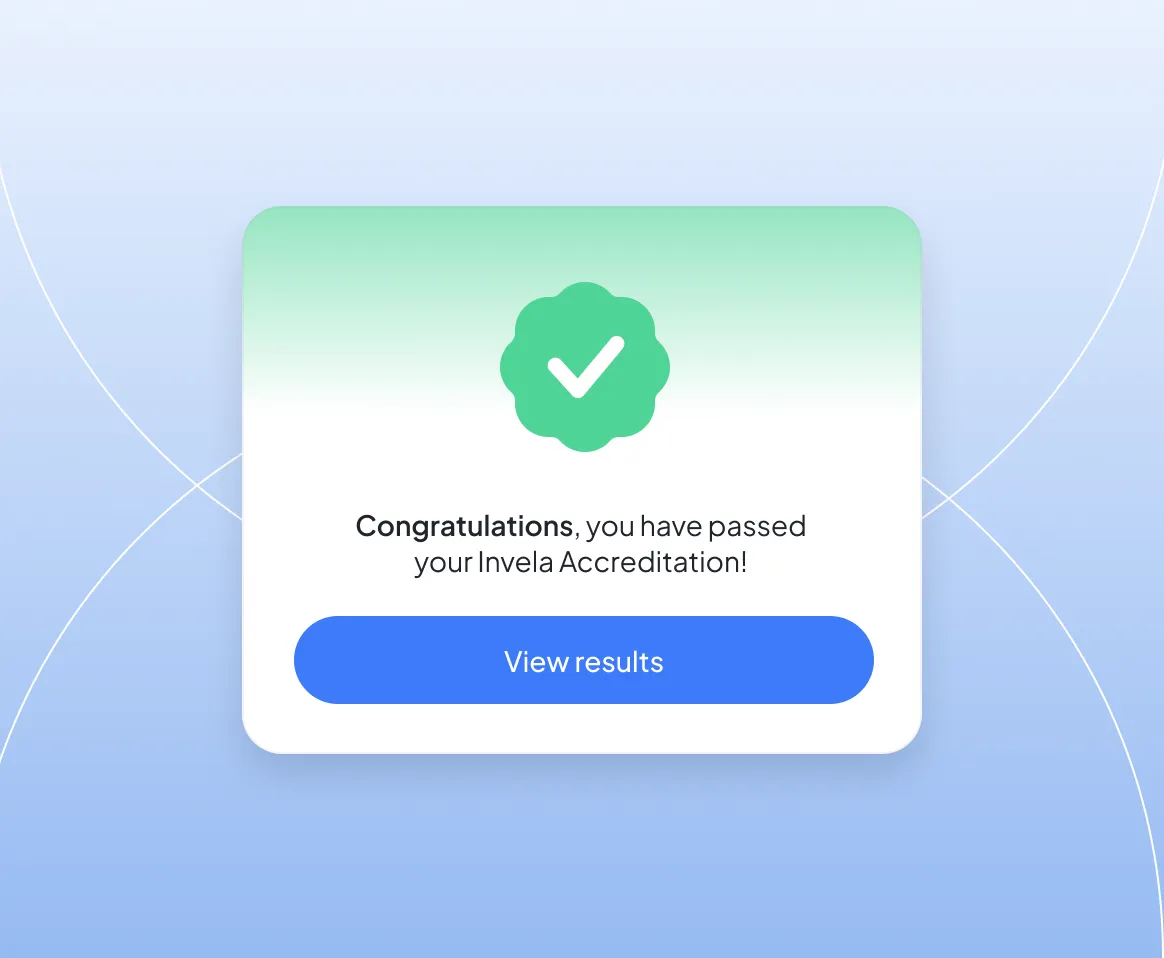
A clear outcome, with the evidence behind it
Every accreditation resolves to one of two outcomes: Accredited or Not Accredited. Each comes with transparent, evidence-based rationale, so financial institutions get objective grounds for their account access decision and applicants get clarity on where they stand and what they need to do to achieve accreditation.
Reassessed as risk changes, not just once a year
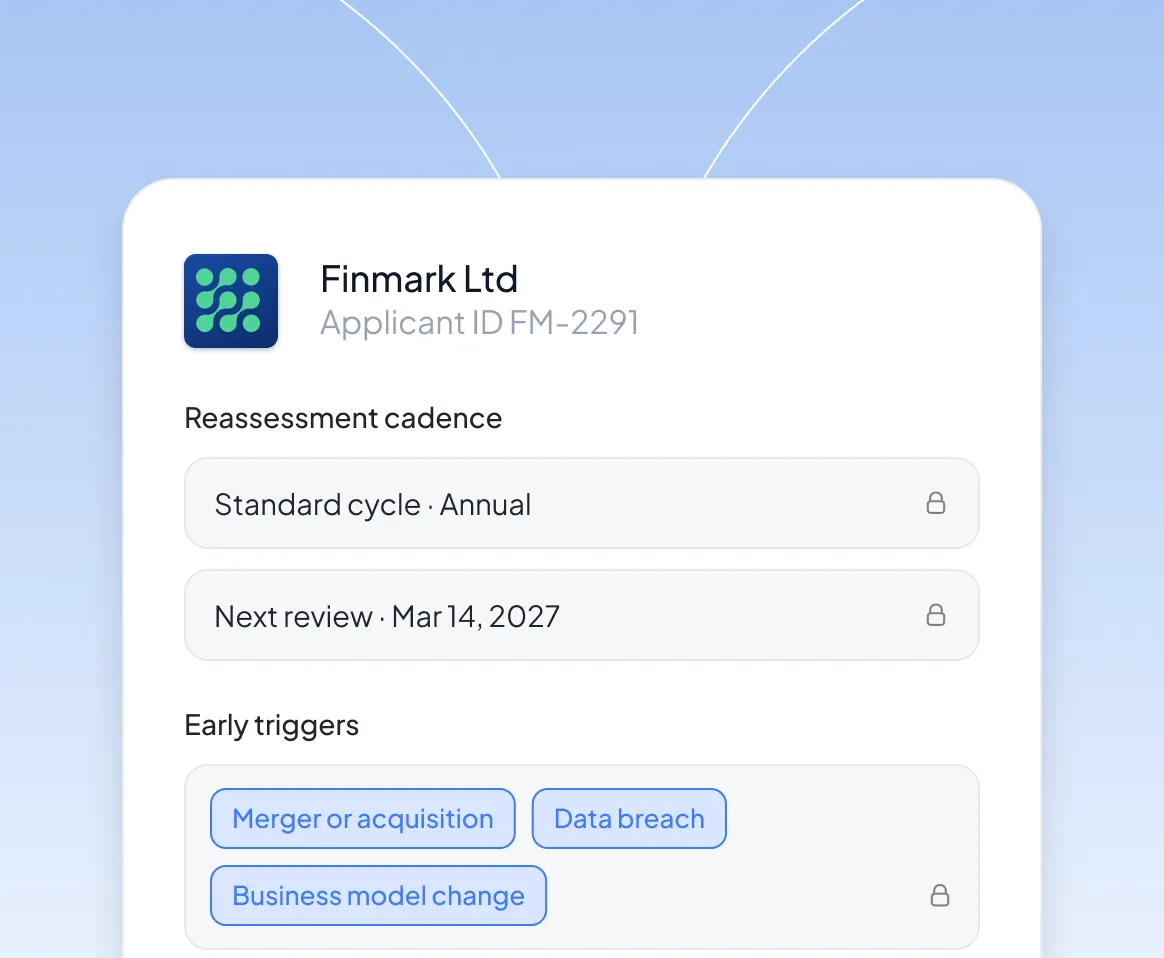
Accreditation is reassessed annually, or earlier if triggered by a merger, a data breach, or a shift in business model etc, so an accreditation decision reflects current status.
How Accreditation works with Risk Indicator
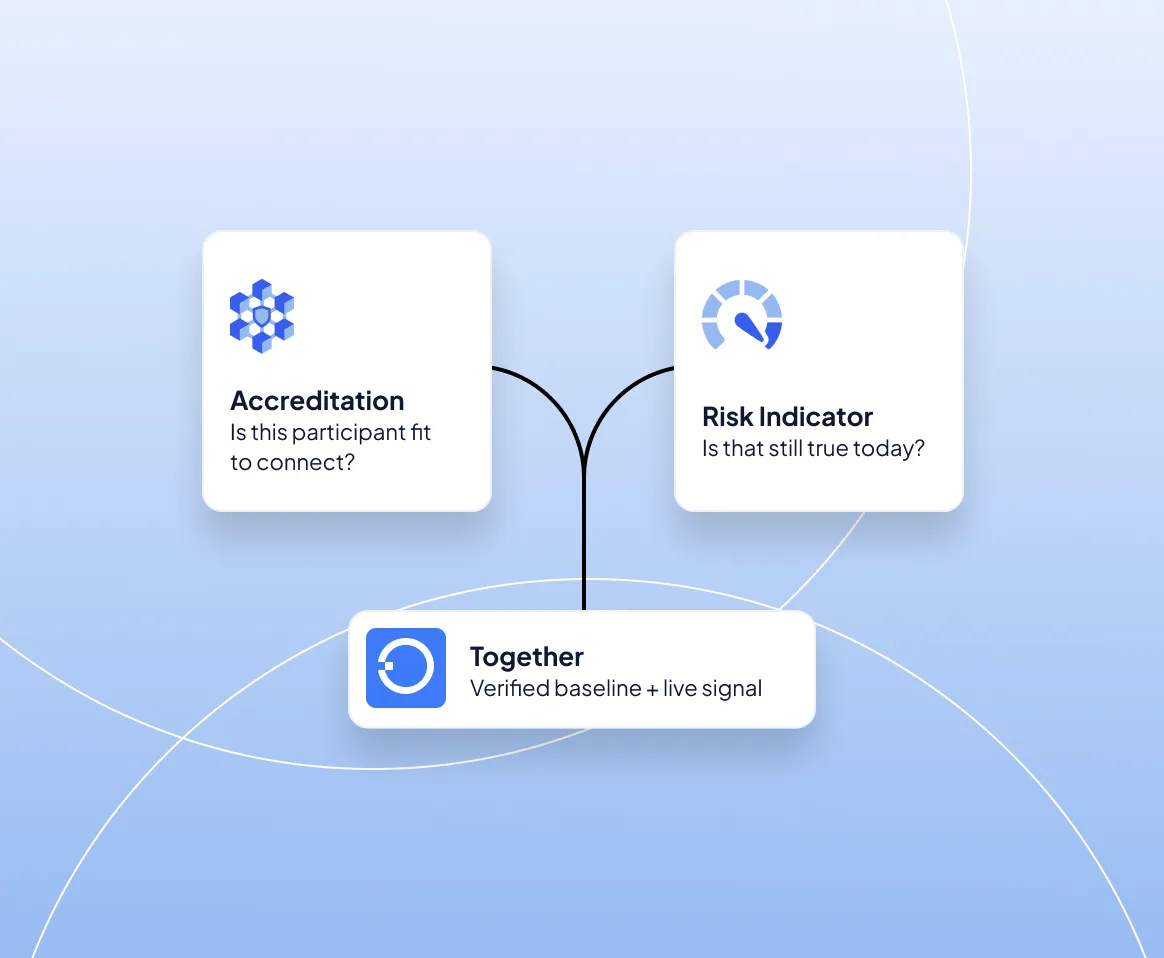
Accreditation and the Risk Indicator answer two different questions. Accreditation asks: is this participant fit to connect, verified against independent evidence? Risk Indicator asks: is that still true today, tracked continuously as conditions change?
Both are required: accreditation without monitoring goes stale the moment conditions change, and monitoring without accreditation has no verified baseline. For accredited participants, that verified baseline is portable, and it feeds the live Risk Indicator score that financial institutions can use in their access decisions.
Three steps to continuous oversight
The moment a participant joins the network, real time risk monitoring begins.
from application to result.
Submit your documentation
Provide company registration, beneficial ownership, data privacy policies, and security certifications once, through Invela.
Get assessed against key control categories
Invela assessors review your evidence.
Get your outcome
Accredited entities receive account access to all financial institutions on the network.
Unaccredited entities receive guidance on what they need to do to achieve accreditation.

Accreditation Insights
Latest news and perspectives from the Invela team.

One accreditation delivers account access to all financial institutions on the network
Frequently asked questions
Accreditation asks whether a participant is fit to connect, verified against independent evidence. Risk Indicator asks whether that is still true today. Both are needed: accreditation without monitoring goes stale, and monitoring without accreditation has no verified baseline. Monitoring begins the moment a participant joins.
Yes. AI reads the submitted evidence, maps it to the control categories, drafts responses and flags gaps or inconsistencies. Human assessors validate every output before any accreditation decision is made.
Instead of a bespoke process for every financial institution, they complete one standardized accreditation, and the result is portable across every relationship in the network. The same evidence is not rebuilt each time, which reduces cost and delay and supports a stronger Risk Indicator score.
It is reassessed annually, or earlier if triggered by a merger, a data breach or a shift in business model, so the decision reflects current status.
Company registration, beneficial ownership, data privacy policies and security certifications such as SOC 2 and ISO, provided once through Invela rather than separately for each financial institution.
The time taken depends on how complete the submitted evidence is. Invela’s AI-assisted process is designed to be faster than a traditional vendor review.
Three: Accredited (pass), Conditionally Accredited (conditional pass, with a retest within three months) or Not Accredited (fail). Each comes with a transparent, evidence-based rationale. Accredited participants appear in the network’s registry and gain account access to all financial institutions on it. Participants that fall short are marked Not Accredited, are not visible to institutions as network participants, and receive a report with the remediation steps needed to reach the bar.
Know Your Business (KYB) checks, information security reviews and operational fit, assessed against the TruSight Best Practice Framework, with S&P Global reviewing a sample of assessments. It helps ensure that only legitimate, secure and qualified participants gain access to the network.
Invela’s AI-assisted assessors review the controls directly, in dialogue with the applicant. Controls that call for judgment rather than document matching go through a person. S&P Global reviews a sample of assessments.
A standardized, purpose-built framework for vetting third-party risk in open finance. It combines AI-assisted assessment with human review, and S&P Global reviews a sample of assessments, so financial institutions can make confident, evidence-based account access decisions at scale.
